On this page
Walk into a countertop showroom today and you will hear two categories thrown around: natural stone and engineered stone. Granite, quartzite, and marble are natural, quarried from the earth in solid slabs. Engineered stone is the man-made side of the aisle, and it has become the most popular countertop choice in the country. But "engineered stone" covers more than one material, and knowing what actually goes into it helps you choose the right surface for a Phoenix kitchen or bath.
This guide explains what engineered stone is, breaks down the main types you will encounter, and shows how it compares to natural stone on the things that matter here: durability, heat, sun, and upkeep. Everything reflects the surfaces Superior Stone & Cabinet works with every day across the Valley.
The share of ground natural quartz in a typical slab of engineered quartz. The rest is polymer resin and pigment. That resin is what makes the surface non-porous, consistent in color, and free from any need to reseal.
What "Engineered Stone" Actually Means
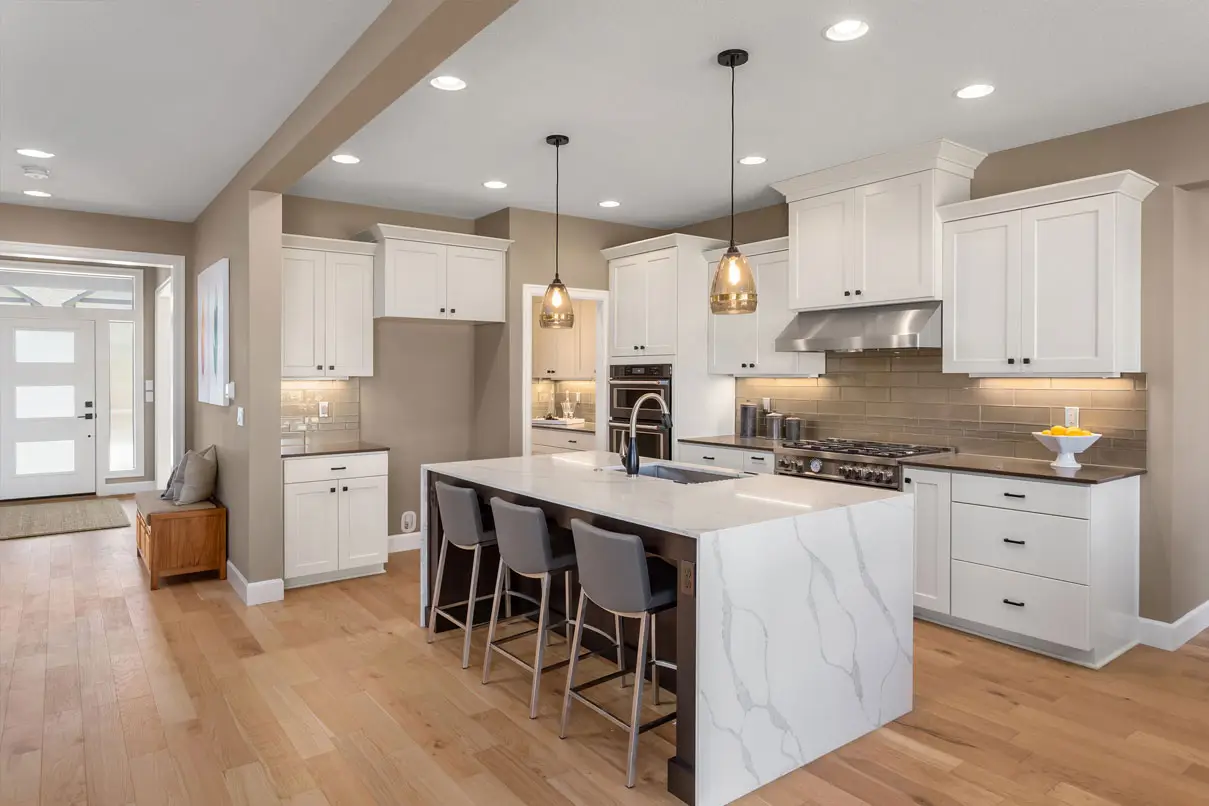
Engineered stone is any countertop surface that is manufactured by combining natural minerals with a binder, rather than being cut as a single solid piece from a quarry. That manufacturing step is the whole difference, and it brings two big advantages.
The first is consistency. Because the material is made in a factory, the color and pattern are predictable from slab to slab. If you pick a sample, the finished countertop will look like that sample. There are no surprises in veining or tone. The second is engineered performance. Manufacturers can build in properties that natural stone does not have on its own, most notably a non-porous surface that resists stains and usually does not need sealing.
The trade-off is that engineered stone lacks the one-of-a-kind character of a natural slab, and depending on the type, it can be more sensitive to heat and sun. The umbrella term covers several materials, but one dominates the market by a wide margin.
Engineered Quartz: The Most Common Type
When people say "engineered stone," they almost always mean engineered quartz. It is made by grinding natural quartz, one of the hardest minerals on earth, and binding it with polymer resin and pigment under heat and pressure. The result is a dense, durable slab that behaves consistently across the whole surface.
Engineered quartz is the go-to for most modern kitchens and baths for good reason:
- Non-porous, so it resists stains and usually does not need to be sealed like granite does
- Consistent color and pattern, with looks ranging from solid colors to convincing marble-style veining
- A very wide palette: Superior stocks over 200 quartz colors from six leading manufacturers
- Hard and scratch-resistant for everyday kitchen use
- Low upkeep. Soap and water is all it takes for daily cleaning
Its limits come from the resin. Quartz is sensitive to high heat, so hot pans need a trivet, and it is not rated for constant direct sun, which matters in Phoenix. If you want the full care routine, see the guide to caring for quartz countertops. Popular engineered lines include Silestone, which is carried in the Superior showroom.
Other Engineered Surfaces
Quartz leads the category, but a few other engineered materials come up when you are researching countertops. They are worth knowing about, even if quartz is the practical choice for most Phoenix homes.
Sintered Stone and Porcelain Slabs
Sintered stone and large-format porcelain are made by compacting natural minerals under intense heat and pressure, with no resin binder at all. That gives them a standout advantage: they are extremely heat-resistant, scratch-resistant, and UV-stable, which makes them one of the few surfaces suited to full sun and outdoor use. The trade-offs are a higher price, more demanding fabrication, and edges that can be more prone to chipping. These are specialty products and availability varies, so ask a designer if a project specifically calls for one.
Recycled Glass Surfaces
Recycled glass countertops set crushed glass pieces into a cement or resin binder, creating a distinctive speckled, terrazzo-like look. They appeal to homeowners prioritizing recycled content and a unique appearance. They are a niche option rather than a mainstream kitchen surface.
Solid Surface
Solid surface material, such as the well-known Corian brand, is an acrylic or polyester composite. It is fully non-porous, can be joined with nearly invisible seams, and is repairable by sanding. It is technically a composite rather than a stone, and it is softer and more heat-sensitive than quartz or natural stone, so it shows up more often in baths and commercial settings than in high-use kitchens.
What customers say
Phoenix homeowners love the results.
Showed up at their showroom / warehouse… picked out a countertop easily, scheduled, installed 2 weeks later. PHENOMENAL quality of installation.
Matthew S. · GoogleWe were able to find a countertop that fit our larger island without any seams, and at a great price as well.
Doug M. · GoogleGreat selections with reasonable price and very helpful workers.
Han D. · Google





Engineered vs. Natural Stone
The most useful comparison for most homeowners is engineered quartz against the natural stones Superior also carries, granite, quartzite, and marble. Here is how they line up.
| Factor | Engineered Quartz | Natural Stone |
|---|---|---|
| How it's made | Manufactured | Quarried in slabs |
| Appearance | Consistent, predictable | Unique, one-of-a-kind |
| Sealing | Usually not needed | Periodic sealing (granite) |
| Heat tolerance | Use a trivet | More heat-tolerant |
| Sun / UV | Limit direct sun | UV-stable |
| Color range | Very wide | Nature's palette |
There is no single winner, engineered quartz wins on low maintenance and design consistency, while natural stone wins on uniqueness, heat, and sun tolerance. For a deeper side-by-side of the individual materials, Superior has a dedicated quartz, granite, and marble comparison guide.
What Works Best in Phoenix
Our climate should steer this decision more than a national guide would suggest. Two Phoenix realities, intense sun and hard water, affect engineered stone directly.
Indoor Kitchens & Baths
For most indoor Phoenix counters, engineered quartz is the practical winner. It usually does not need sealing, wipes clean with soap and water, and comes in a huge range of colors. It is a low-maintenance surface that suits busy Valley households.
Sun-Drenched or Outdoor Spots
Standard engineered quartz can fade or yellow under constant Arizona sun and is usually not warrantied for outdoor use. For full-sun windows, patios, and outdoor kitchens, UV-stable natural granite or quartzite is the safer pick.
Hard Water
Phoenix has very hard water, but quartz's non-porous surface shrugs off mineral staining. Any film that forms wipes away with a soft cloth. Drying the surface around sinks keeps it looking crisp between cleanings.
Heat & Daily Durability
All resin-based surfaces, quartz included, need a trivet under hot cookware. Natural granite and quartzite are more forgiving of heat. On a busy cooktop, factor that into your material choice.
Choosing Your Surface
With the material types sorted, narrowing your choice comes down to a few practical questions: How much maintenance do you want to do? Will the surface see direct sun or heavy heat? Do you want a consistent, predictable look or a unique natural slab? And what palette are you working with?
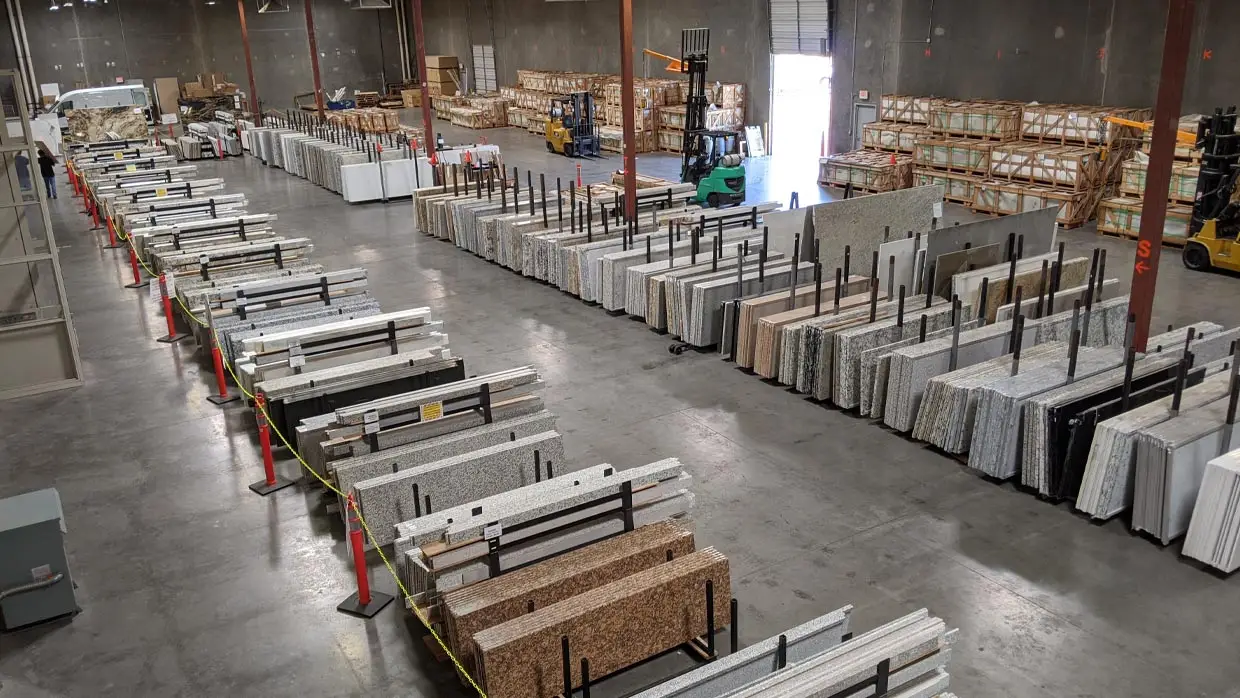
The best way to decide is to see full slabs and samples in person under real light. Superior Stone & Cabinet stocks engineered quartz in over 200 colors alongside natural granite, quartzite, and marble in its Phoenix showroom, so you can compare engineered and natural surfaces side by side. In-house designers can help you match a surface to your cabinets, your budget, and how you actually use your kitchen, whether that is a full kitchen remodel, a bathroom vanity, or a commercial project.
⚠ Common engineered-stone misconceptions
- "Engineered stone is indestructible". It is tough, but high heat and constant UV can still damage it
- Not all quartz is equal; quality and warranty vary by manufacturer, so ask what line you are getting
- Standard indoor quartz used outdoors in Arizona sun will likely fade over time, choose UV-stable materials for full sun
- A hot pan on any resin surface can scorch it, always use a trivet, even on heat-resistant natural stone
- Quartz and quartzite are not the same thing. One is engineered, the other is natural stone
Compare Engineered and Natural Stone in Person
Superior Stone & Cabinet stocks 200-plus quartz colors plus granite, quartzite, and marble at its Phoenix showroom, with in-house designers and free in-home estimates across the Valley.
Request a Free In-Home EstimateFrequently Asked Questions
What is engineered stone?
Engineered stone is a man-made countertop surface created by binding natural minerals with a binder rather than quarrying a solid slab. The most common type is engineered quartz, made from roughly 90 percent ground natural quartz combined with resins and pigments. Because it is manufactured, it offers consistent color and pattern plus a non-porous surface.
Is quartz an engineered stone?
Yes. Quartz countertops are the leading form of engineered stone, produced by grinding natural quartz and binding it with resin and pigment under pressure. This differs from quartzite, which is a natural stone quarried in solid slabs despite the similar name.
What is the difference between engineered stone and natural stone like granite?
Natural stone such as granite, quartzite, and marble is quarried in solid slabs, so every piece is unique. Engineered stone is manufactured, so its color and pattern are consistent. Engineered quartz is non-porous and usually does not need sealing, while most natural stone is porous and benefits from periodic sealing. Natural stone tends to handle heat and direct sun better.
Does engineered stone need to be sealed?
No. Engineered quartz is non-porous because the resin binder fills the surface, so it usually does not need sealing. The stain resistance is built in at the factory and lasts the life of the countertop. One of the main reasons homeowners choose it over natural stone, which typically needs resealing every year or two.
Is engineered stone good for outdoor kitchens in Phoenix?
Standard engineered quartz is not ideal for outdoor or sun-drenched spots in Phoenix. The resin can fade or yellow under constant UV, and most manufacturers do not warranty it for outdoor use. For full sun and outdoor kitchens, UV-stable natural stone like granite or quartzite is the safer choice.
Is engineered quartz heat resistant?
Quartz resists everyday warmth, but its resin binder is sensitive to high heat, so a hot pan set directly on it can scorch or discolor the surface. Always use a trivet. Natural stone like granite and quartzite tolerates heat better, though trivets are still smart on any surface.
Is engineered stone more durable than granite?
It depends on the type of durability. Engineered quartz resists stains and chips very well, making it lower-maintenance day to day. Granite and quartzite resist heat and sun better. Neither is universally more durable. The right choice depends on how and where the countertop will be used.
What engineered stone countertops does Superior Stone & Cabinet offer?
Superior offers engineered quartz in over 200 colors from six leading manufacturers, including the Silestone line, at its Phoenix showroom. The team also carries natural granite, quartzite, and marble, so you can compare engineered and natural options side by side. Free in-home estimates are available across the Phoenix metro.
Find the Right Countertop for Your Phoenix Home
Visit the Superior Stone & Cabinet showroom or call (602) 437-0088. Free in-home estimates throughout the Phoenix metro, serving Mesa, Tempe, Chandler, Scottsdale, and the rest of the Valley. See finished projects in the remodeling gallery.
Get Your Free EstimateKeep reading
Related articles
Kitchen Islands: Design Ideas with Superior Stone’s Quartz Countertops
As kitchens evolve, so does the role of the island, making remodeling a valuable investment for homeowners seeking a blend of aesthetics and enhanced utility.
Quartz · July 10, 2025Discover the Innovation Behind Symphony Printed Engineered Stone
Discover Symphony printed engineered stone by Aurea Stone—luxury design, eco-safe production, and stunning styles like Calacatta Ghiandia.
Quartz · July 29, 2026Why Phoenix Buyers Choose Quartz Countertops
Why Phoenix homeowners choose quartz countertops: non-porous, low-maintenance, hard-water friendly, and durable — plus the one place it isn't the right pick.

Visit the showroom & warehouse
Pick your exact slab in person.
Walk the slab racks, compare colors side by side, and talk with an on-site designer. No appointment needed.
| Mon – Fri | 8 am – 5 pm |
| Saturday | 10 am – 3 pm |
| Sunday | Closed |
| Warehouse pickup Mon–Fri 8 am – 3 pm | |