On this page
The most-requested countertop in Valley kitchens. An honest look at what makes it a fit, and the one place it isn't.
Walk through our showroom on any given weekend and you'll notice something: more Phoenix homeowners leave with quartz than any other countertop. It's the surface people keep asking for by name. But "everyone picks it" isn't a good enough reason to put it in your kitchen, so let's get into why it works so well in the Valley specifically, and where it doesn't.
Quick heads-up on what this guide is not: we're not going to talk pricing here (that's a conversation for your free in-home estimate, where the numbers actually depend on your kitchen). This is about fit, matching quartz to how you live, cook, and clean in a Phoenix home.
First, what quartz actually is
Quartz countertops are engineered. They're made from crushed natural quartz, one of the hardest minerals on earth, sealed together with a protective resin and pigment. That manufacturing step is the whole story: because the slab is bound in resin rather than quarried as solid rock, the surface ends up non-porous, and the color and pattern stay consistent edge to edge instead of shifting from one part of the slab to the next.
That's the key difference from natural stone. Granite and marble are quarried in solid slabs, so every piece is unique but also porous. They drink in liquids and need periodic sealing. Most quartz doesn't. If you want the deeper material breakdown, we cover it in our quartz vs. granite vs. marble guide, and there's more on the category as a whole in our countertop options overview.
The quartz difference at a glance
Three numbers capture most of why homeowners gravitate to it:
Non-porous and low-maintenance aren't just spec-sheet bullet points in Phoenix, as you'll see below, they're exactly the traits that matter most against our hard water and dust. Browse the range any time on our quartz color page.
Why Phoenix buyers keep choosing it
When we ask homeowners what sold them on quartz, the same handful of answers come up again and again.
It rarely needs sealing
Granite and marble get resealed on a schedule. Most quartz doesn't. The non-porous surface is finished at the factory. A few newer types call for occasional sealing, but that's the exception, so for most households it's one less maintenance chore.
It laughs off hard water
Because nothing soaks in, the Valley's mineral-heavy water leaves residue on top instead of staining the stone. A quick wipe and it's gone.
It's built for busy kitchens
Quartz is genuinely hard and stands up to the everyday scrapes and scuffs of family life. It's a forgiving surface for households that actually cook.
The variety is enormous
With more than 200 colors and styles, including strikingly realistic marble looks, there's a quartz for nearly any kitchen, from bright white to deep, dramatic veining.
Cleanup is effortless
Soap and water handle it. No special stone cleaners, no poultices for stains, which also means desert dust never becomes a project.
It adds resale value
In an active Phoenix market, quartz reads as a modern, move-in-ready upgrade that buyers and renters recognize and want.
The Phoenix angle: hard water, dust & humidity
Countertops don't perform in a vacuum. They perform in your climate. Here's how quartz holds up against the three things the Valley throws at a kitchen.
- Hard water: Phoenix water is mineral-rich, and those minerals etch and spot porous surfaces over time. Quartz is non-porous, so hard-water residue wipes off the surface rather than working its way in.
- Desert dust: Fine dust is a fact of Valley life. A non-porous, easy-clean surface means a damp cloth is all it takes, no grout-like seams to scrub, no fuss.
- Monsoon humidity: When the summer humidity spikes, quartz doesn't absorb moisture, so you don't get the swelling or staining that can affect more porous materials.
- Everyday spills: Coffee, wine, citrus, and oil sit on top of quartz instead of soaking in, so a quick wipe usually undoes the accident.
Where quartz isn't the best pick
We'd rather tell you the truth than oversell. Quartz is a fantastic indoor surface, but there are two places in an Arizona home where it isn't the right call, and we want you to know before you buy.
Keep these in mind
- Direct, prolonged sun. Arizona UV is intense, and years of constant direct sunlight can cause some quartz resins to discolor or fade. Keep quartz out of spots that bake in unshaded afternoon sun.
- Outdoor kitchens and patios. For a covered patio or outdoor kitchen, choose a natural stone like granite or quartzite, or a porcelain surface, all of which handle sun and heat better than quartz.
- High, direct heat. Quartz resists everyday warmth, but a pan straight off the burner can scorch the resin. Use trivets and hot pads, and if you routinely set down very hot cookware, granite or quartzite is more forgiving.
The honest takeaway: for the vast majority of Phoenix kitchens and bathrooms (indoor, climate-controlled, and out of constant direct sun) quartz is a superb, low-worry choice. Save the natural stone and porcelain for the patio.
What customers say
Phoenix homeowners love the results.
Showed up at their showroom / warehouse… picked out a countertop easily, scheduled, installed 2 weeks later. PHENOMENAL quality of installation.
Matthew S. · GoogleWe were able to find a countertop that fit our larger island without any seams, and at a great price as well.
Doug M. · GoogleGreat selections with reasonable price and very helpful workers.
Han D. · Google




Quartz vs. granite vs. quartzite
Quartz is our most popular pick, but it isn't the only great option. Here's how the three top contenders stack up for a Valley home.
| Quartz | Granite | Quartzite | |
|---|---|---|---|
| Type | Engineered (crushed quartz + resin) | Natural stone | Natural stone |
| Sealing | Rarely needed | Periodic resealing | Periodic resealing |
| Hard-water & stains | Non-porous, resists both | Porous; sealing helps | Porous; sealing helps |
| Direct heat | Use trivets | Very heat-tolerant | Very heat-tolerant |
| Sun / outdoor use | Best kept indoors | Handles sun well | Handles sun well |
| Look | Consistent, huge variety | Unique, natural patterns | Unique, natural patterns |
| Best for | Low-maintenance indoor kitchens & baths | Heat-tolerant, one-of-a-kind surfaces | Hardness and beauty for high-use kitchens |
None of these is objectively "best". It comes down to how you cook and where the counter lives. If you want the natural-stone side of the story, our quartzite and granite pages walk through those, and the full lineup is on our countertops overview.
See the quartz in person. It's the only way to choose.
Photos can't capture how a slab reads in your light. Our designers can pull colors, pair them with cabinets, and show you a 3D rendering before anything is cut, free, at our Phoenix showroom.
Book a Free EstimateChoosing your quartz
Once you've settled on quartz, the fun part is narrowing down the look. A few things worth knowing as you shop our selection.
Marble looks, without the marble upkeep
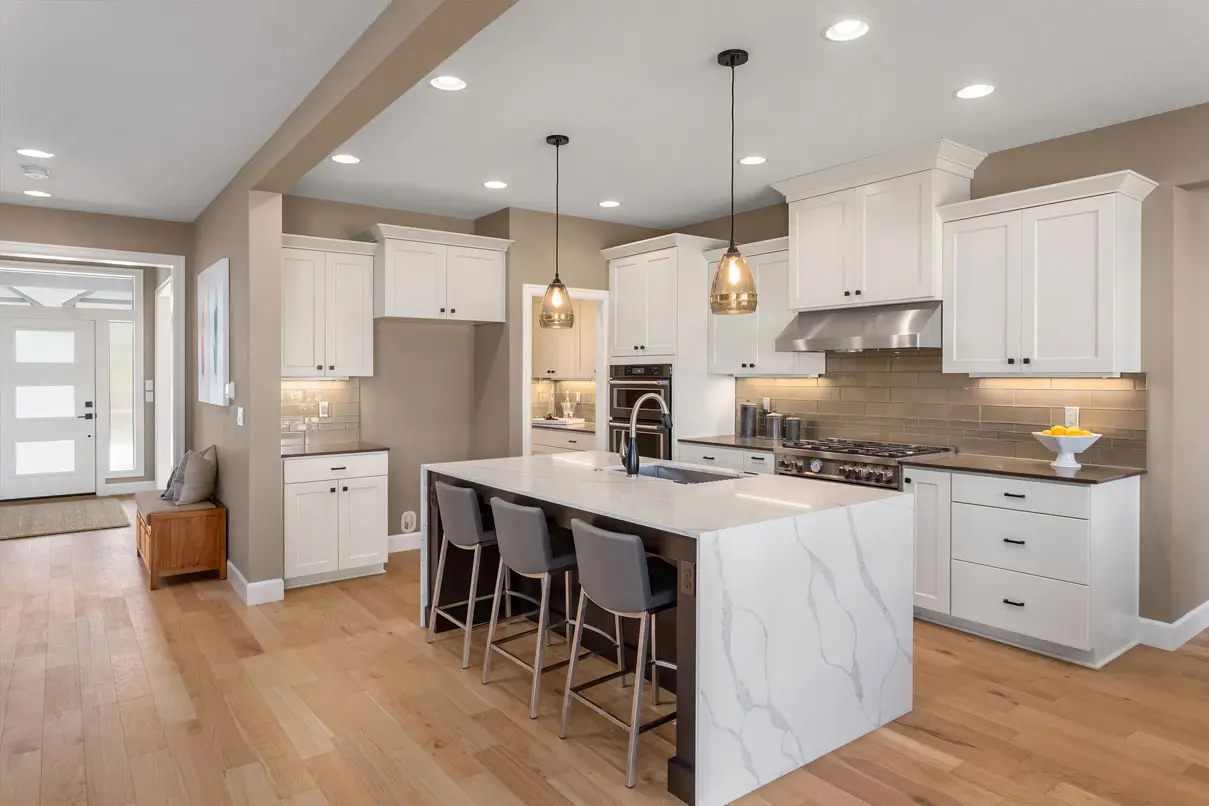
One of the biggest draws today is quartz that mimics marble, soft white canvases with fine veining. Lines like Silestone have made these looks remarkably convincing, so you can get the airy, high-end marble aesthetic without the routine sealing and etching upkeep that real marble demands in a working kitchen.
Match it to your cabinets and backsplash
Quartz is only one layer of the design. It should be chosen alongside your cabinets, browse door styles and colors, and your tile and backsplash, so the whole room reads as one intentional palette rather than a set of separate decisions.
And it isn't just for kitchen counters. Quartz is a favorite for bathroom vanities and more, thanks to that same non-porous, moisture-resistant surface:
Countertops & islands
The classic use. Durable, easy to clean, and available in island-friendly slabs for waterfall edges and seamless runs. Start with a kitchen remodel.
Vanity tops
Moisture resistance makes quartz a natural fit for the bathroom. See how it fits into a bathroom remodel.
Full-height backsplashes
Running the same quartz up the wall creates a clean, grout-free backsplash that's a breeze to wipe down, popular in modern Valley kitchens.
Beyond the kitchen
From laundry rooms to full remodels, quartz shows up wherever a tough, low-maintenance surface helps.
The bottom line
Phoenix buyers choose quartz because it fits the way we actually live here: hard water, dust, busy kitchens, and no patience for constant upkeep. Give it an indoor home out of the harsh sun, and it rewards you every single day.
Frequently asked questions
What is quartz made of?
Quartz countertops are engineered from crushed natural quartz, one of the hardest minerals on earth, sealed together with a protective resin and pigment. Because they are manufactured rather than quarried as a solid slab, the surface is non-porous and the color and pattern stay consistent from one end to the other. It is still a natural stone at heart, just ground and finished into an engineered surface.
Do quartz countertops need to be sealed?
Usually not. Most quartz is non-porous and does not require sealing, unlike granite and marble, which are typically resealed on a regular schedule. A few newer manufacturers and specific quartz types now recommend occasional sealing, but that is the exception rather than the norm, so it is worth checking the care guidelines for the slab you choose. Either way, day-to-day care stays simple: warm water and a little mild dish soap, which is a big part of why Phoenix homeowners choose it.
Why is quartz so popular with Phoenix buyers?
Phoenix homeowners tend to choose quartz for a mix of reasons: it is non-porous, so it shrugs off the mineral staining that comes with the Valley's hard water; it needs little to no sealing and wipes clean of everyday desert dust; it stands up to busy family kitchens; and it comes in a huge range of colors and marble-look patterns. It also adds long-term resale value, which matters in an active housing market.
Is quartz a good choice with Phoenix hard water?
Yes. The Valley has notably hard water, which leaves mineral spots and can etch more porous surfaces over time. Because quartz is non-porous and does not absorb liquids, hard-water residue sits on the surface and wipes away with soap and water instead of soaking in. That makes quartz one of the more forgiving countertop choices for Phoenix kitchens and baths.
Can quartz be used outdoors or in direct sun in Arizona?
Quartz is best kept indoors. Prolonged, direct sun exposure can cause some quartz resins to discolor or fade over the years, and Arizona's UV is intense. For a covered patio, outdoor kitchen, or a spot that bakes in direct afternoon sun, natural stone like granite or quartzite, or a porcelain surface, holds up better to heat and UV. Indoors, away from constant direct sunlight, quartz performs beautifully.
Is quartz heat resistant?
Quartz resists everyday warmth well, but it is not fully heatproof. The resin that binds it can be scorched or discolored by a hot pan straight off the burner, so it is best to use trivets and hot pads. If you routinely set down very hot cookware, granite or quartzite tolerates high heat better. For normal cooking with a little care, quartz holds up just fine.
Quartz vs. granite: which is better for a Phoenix kitchen?
It depends on how you use your kitchen. Quartz is non-porous, rarely needs sealing, resists hard-water staining, and offers very consistent color, which makes it a great low-maintenance everyday choice. Granite is a natural stone with one-of-a-kind patterns and better tolerance for direct heat, but it needs periodic sealing. Many Phoenix buyers land on quartz for maintenance and consistency, and granite when they want a natural, heat-tolerant surface.
Does Superior Stone & Cabinet install quartz in the Phoenix area?
Yes. Superior Stone & Cabinet carries over 200 quartz colors and styles at its Phoenix showroom at 3479 E University Dr, and installs quartz countertops throughout the Valley. Free in-home estimates and a 3D design of your kitchen or bath are available before you commit. Call (602) 437-0088 or visit the showroom to see the selection in person.
Ready to find your quartz?
See 200+ quartz colors in person, pair them with cabinets and tile, and get a free 3D design of your space. Serving Phoenix and the entire Valley.
Get a Free Estimate Or call (602) 437-0088 · Tour the showroom · Contact usKeep reading
Related articles
How to Care for Quartz Countertops
How to clean and care for quartz countertops in Phoenix — daily cleaning, what to avoid, and handling our hard water and intense sun. No sealing required.
Kitchen · April 14, 2026Kitchen Islands: Design Ideas with Superior Stone’s Quartz Countertops
As kitchens evolve, so does the role of the island, making remodeling a valuable investment for homeowners seeking a blend of aesthetics and enhanced utility.
Quartz · February 7, 2026How to select quartz countertops when you are selling your home.
In this blog post, we'll share some tips on how to choose quartz countertops that will help you get the most out of your home sale.
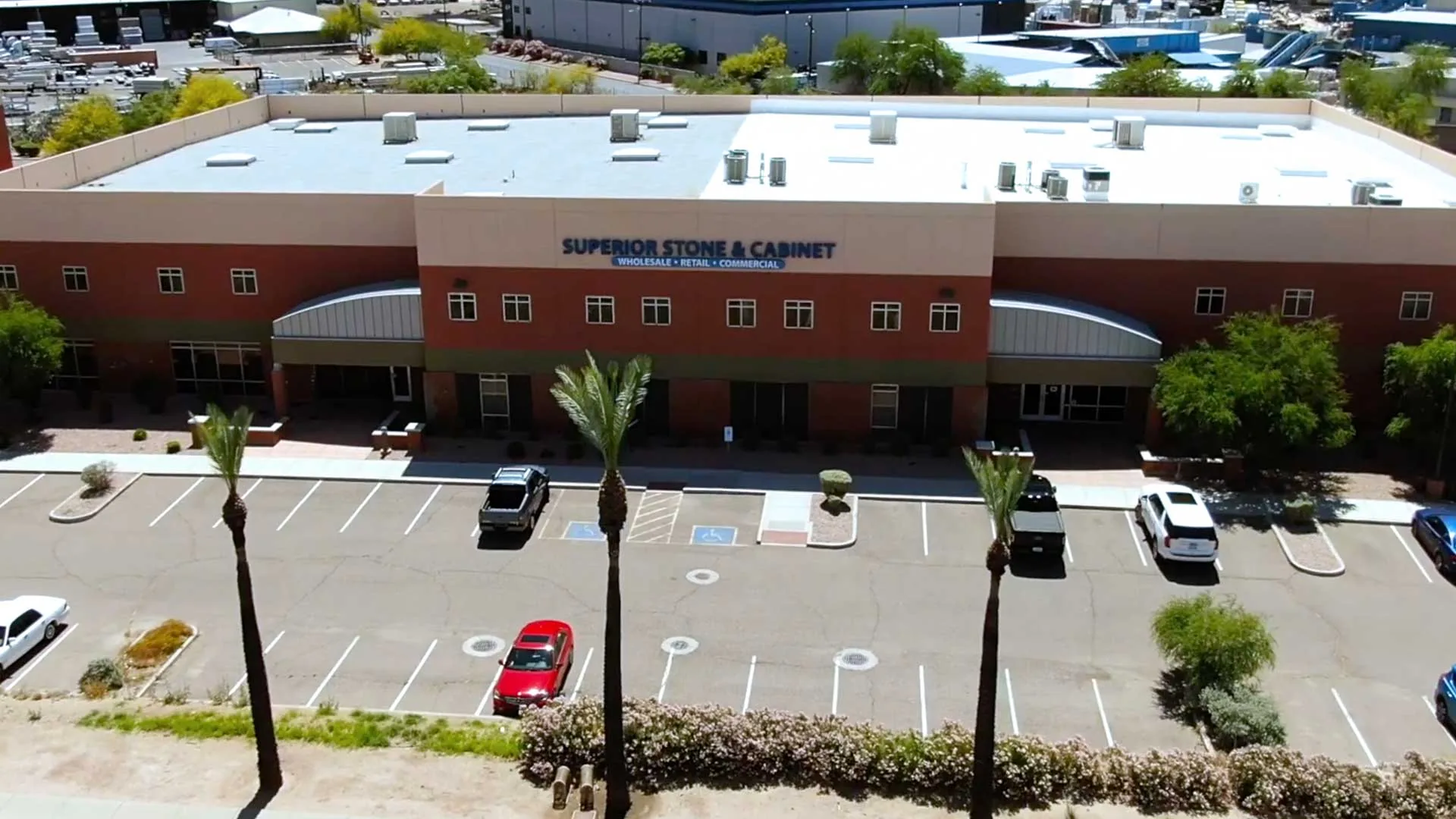
Visit the showroom & warehouse
Pick your exact slab in person.
Walk the slab racks, compare colors side by side, and talk with an on-site designer. No appointment needed.
| Mon – Fri | 8 am – 5 pm |
| Saturday | 10 am – 3 pm |
| Sunday | Closed |
| Warehouse pickup Mon–Fri 8 am – 3 pm | |