
Kelly's Corner
Cabinet Repairs Made Simple
On this page
Welcome back to Kelly’s Corner, where I take you behind the scenes of our Phoenix showroom and share practical, real-world advice from years of working with homeowners and contractors. Kitchens are meant to be lived in, which means bumps, scrapes, and little accidents are inevitable. No matter how careful you are. A chair might graze a cabinet edge, leaving a visible dent. Daily cooking can wear down paint or stain on high-touch doors. Hinges loosen, drawers sag, and handles wobble with time. I’ve seen all of it, and I promise: most everyday cabinet damage can be handled quickly, affordably, and beautifully when you know what to look for and how to approach it. In this guide, I’ll show you how I evaluate issues, where DIY makes sense, and when it’s time to bring in a pro. We’ll walk through touchups for finishes, door and drawer adjustments, hardware fixes, and smart prevention so the same problem doesn’t come back. If you need a trusted partner, my team at Superior Stone & Cabinet can help you source the right materials and coordinate expert service. Think of this as your friendly field manual for cabinet repairs, written by someone who lives and breathes kitchens every day.
Understanding What You’re Looking At: A Pro’s Assessment Process
Every repair starts with a calm, methodical assessment. In our showroom, I always begin with three questions: material, location, and impact. First, identifying the material matters because painted maple, stained oak, laminate, and thermofoil all respond differently to touchups. A scratch on painted doors may need color-matched lacquer; a dent on stained wood may call for filler and stain layering. Second, the location of the damage guides the fix. Is it on a door stile, a drawer front, or an edge where hands constantly rub? High-touch areas demand stronger, longer-lasting repairs. Third, I consider impact: will the blemish worsen with normal use? A tiny surface scratch may stay cosmetic for years, but a hinge that’s pulled out will only get worse without reinforcement. From there, I document color and sheen. A “perfect” color match looks wrong if the sheen is off, so I compare under the same light you’ll live with, daylight by the window, warm pendants over the island, or cool cans over the perimeter. Finally, I talk through expectations. Some repairs virtually disappear; others become “soft focus”, invisible from standing distance but detectable inches away.
Fast Wins & Fixes You Can Do This Weekend
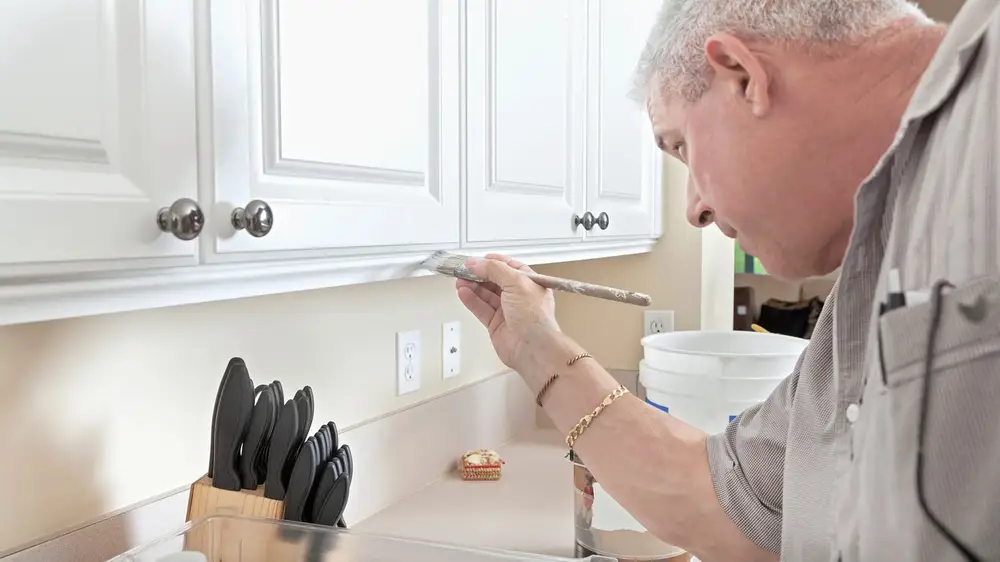
- Paint scuffs on cabinet doors: Clean with mild soap and water, dry thoroughly, then dab on a color-matched touchup paint using a fine brush. Feather the edges, let it level, and finish with a clear coat to match sheen.
- Dents in wood doors or frames: Steam small dents by applying a damp cloth and pressing with a warm iron to swell fibers, then sand lightly and touch up. For deeper dents, use wood filler wax and stain or paint to blend.
- Loose handles or pulls: If screw holes are stripped, fill with toothpicks dipped in wood glue, trim flush, and reinstall. For a premium fix, use hardwood plugs or threaded inserts.
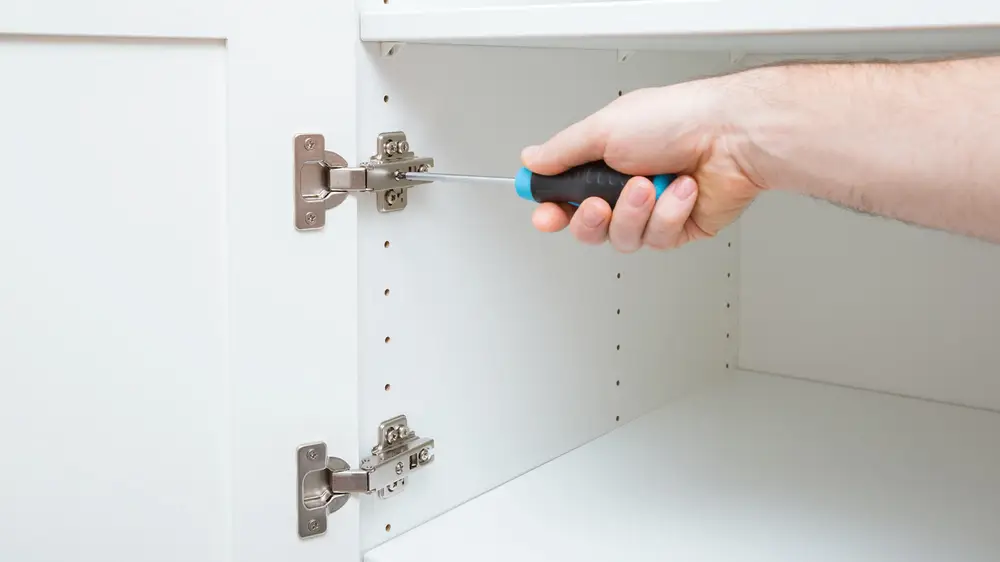
- Sagging doors: Adjust hinges with a screwdriver. Most European hinges allow side-to-side, up-and-down, and in-and-out tweaks. For badly sagging doors, replace worn hinges with new soft-close models.
- Hinges that pulled out: Reinforce with longer screws that reach the cabinet frame, or fill old holes with glue and dowels before reinstalling.
- Drawers rubbing or sticking: Adjust the slides by loosening screws and shifting alignment. Clean tracks of debris and apply a dry lubricant. For warped or sagging bottoms, reinforce with an added support rail.
- Worn drawer fronts: Remove the front, repair or repaint, and reinstall with new screws or brackets for a tighter, sturdier fit.
- Toe-kick dings: Replace damaged toe-kick boards with color-matched replacements for a quick refresh.
What customers say
Phoenix homeowners love the results.
Showed up at their showroom / warehouse… picked out a countertop easily, scheduled, installed 2 weeks later. PHENOMENAL quality of installation.
Matthew S. · GoogleWe were able to find a countertop that fit our larger island without any seams, and at a great price as well.
Doug M. · GoogleGreat selections with reasonable price and very helpful workers.
Han D. · Google







Cabinet Touchups: Matching Color, Sheen, and Grain
Cabinet touchups are equal parts product knowledge and restraint. For painted doors, I recommend a high-quality touchup system that includes base color, toner, and a clear topcoat to fine-tune sheen. The secret is layering thin coats. For stained wood, I’ll first identify the base tone (warm red-brown? cool walnut? honey maple?) and whether the grain stands out. Touchup markers or gel stains can lay in color, but I often use two or three tones to mimic the natural grain variation. After the color is right, I adjust sheen. Most kitchens sit somewhere between satin and semi-gloss, but even a ten-percent difference is visible in raking light. If damage is severe, replacing that one door or drawer front is often the most economical path to a “like-new” result. Manufacturers often keep style catalogs for years. Don’t overlook simple kitchen upgrades during repairs: swapping to soft-close hinges can quiet the kitchen and reduce future wear, while adding felt bumpers cuts down on finish rub.
FAQs: Kelly Answers Your Most-Asked Questions
Can I fix a cabinet door that’s rubbing against another?
Yes, usually it’s a hinge adjustment. Most hinges have three screws that fine-tune alignment. Adjust incrementally until the gap is even.
What’s the best way to repair a scratched cabinet finish?
Clean the area, apply a color-matched touchup marker or filler, then blend with a wax filler topcoat. Always test in a hidden spot first.
My drawer bottom is sagging. Can I fix it without replacing the drawer?
Often yes. Add an under-support rail or glue in a thin plywood reinforcement panel to stiffen the base.
How do I fix handles that keep coming loose?
Reinforce the screw holes with wood glue and dowels or use a threaded insert for a stronger, lasting hold.
When is it smarter to replace a cabinet door instead of repairing it?
If the veneer is peeling beyond the edge or the profile is crushed, replacement is cleaner and usually more cost-effective than a labor-heavy repair.
When to DIY and When to Call the Pros
Here’s my honest line: if the damage is small, isolated, and cosmetic, like a scratch or paint scuff, DIY makes sense. If the damage involves structural issues, like drawers off track, hinges ripping from frames, or warped doors, call a pro. These fixes often need specialized tools and experience to ensure a lasting repair. Color or sheen matching on large, visible areas is another pro-worthy job. Restoring a uniform finish is part art, part science.
Care, Cleaning, and Prevention: Keeping Your Fixes Invisible
Repairs last longest when paired with good habits. Use mild, non-abrasive cleaners for cabinets and avoid harsh chemicals that dull finishes. Add soft habits: always use handles and pulls instead of touching painted corners, tighten hardware each season, and consider upgrades like soft-close hinges that reduce impact. For drawers, keep slides clean and aligned to prevent stress on joints. Keep a discreet touchup kit: your exact cabinet color, a few grain markers, fine artist brushes, wood filler, and microfiber cloths. Label everything so it’s grab-and-go when life happens. Finally, keep perspective. Kitchens are command centers, craft stations, homework hubs, and coffee shops all in one. With a little care and some strategic planning, your cabinet repairs will stay out of sight and out of mind.
From the Showroom Floor: How We Help You Choose the Right Path
When someone walks into our showroom asking for a repair. I say let’s look at it together. We evaluate the material, lighting, and impact, then build a sensible plan. Sometimes that plan is a quick in-home touchup kit and a five-minute tutorial. Other times it’s a scheduled visit with a carpenter who can reset drawers, reinforce hinges, or replace a door. And occasionally, the right fix is a swap, replacing a single door or drawer front to get a flawless result for less time and money than chasing perfection. Because we stock and install cabinets and hardware, we can coordinate everything under one roof: color matching, product sourcing, and skilled repairs that blend with your existing finishes. Transparency is our policy. I’ll tell you when a DIY approach is great, when professional work will pay off, and when your money is better spent on a small replacement. This is the heart of Kelly’s Corner: pairing insider know-how with practical, budget-savvy solutions.
Conclusion
Life leaves fingerprints, and kitchens collect them first. The good news is that most cabinet blemishes are solvable, and many are solvable fast. With a calm assessment, the right products, and a clear plan, you can erase the little reminders of daily use. Use simple DIYs for low-risk areas, call a pro for structural or high-visibility fixes, and consider a strategic replacement when it delivers a better, more durable outcome. Keep your touchup kit handy, protect high-touch zones, and treat hardware maintenance as part of the solution. Above all, remember that a well-loved kitchen isn’t a museum. It’s a working studio for your life. My team and I at Superior Stone & Cabinet are here to help you keep it beautiful without over-complicating the process. Bring photos or stop by the showroom and we’ll talk through options, costs, and expectations openly. From quick cabinet touchups to full door replacements, we’ll guide you toward smart, satisfying results. Together, we’ll turn small imperfections into a polished, confident space you’re proud to gather in.
Keep reading
Related articles
Salome High School Students Build a House — Superior Stone & Cabinet Installs the Countertops
Salome High School's CTE students built a house from the ground up. Superior Stone & Cabinet supplied and installed White Orion granite countertops to finish it right.
Cabinets · February 25, 2026Cabinet door styles: Inset vs. Overlay vs Frameless
Expert advice on choosing between inset, overlay, and frameless cabinets to find the perfect vibe for your Phoenix home.
Kelly's Corner · January 2, 2026The Impact of Cabinet Hardware
We'll explore the latest trends in cabinet hardware and offer simple tips to help you create a space that feels complete, stylish, and unique.

Visit the showroom & warehouse
Start your remodel with a visit.
See materials in person and talk with an on-site designer about design, materials and installation, all in one place. No appointment needed.
| Mon – Fri | 8 am – 5 pm |
| Saturday | 10 am – 3 pm |
| Sunday | Closed |
| Warehouse pickup Mon–Fri 8 am – 3 pm | |