Quartz Counters
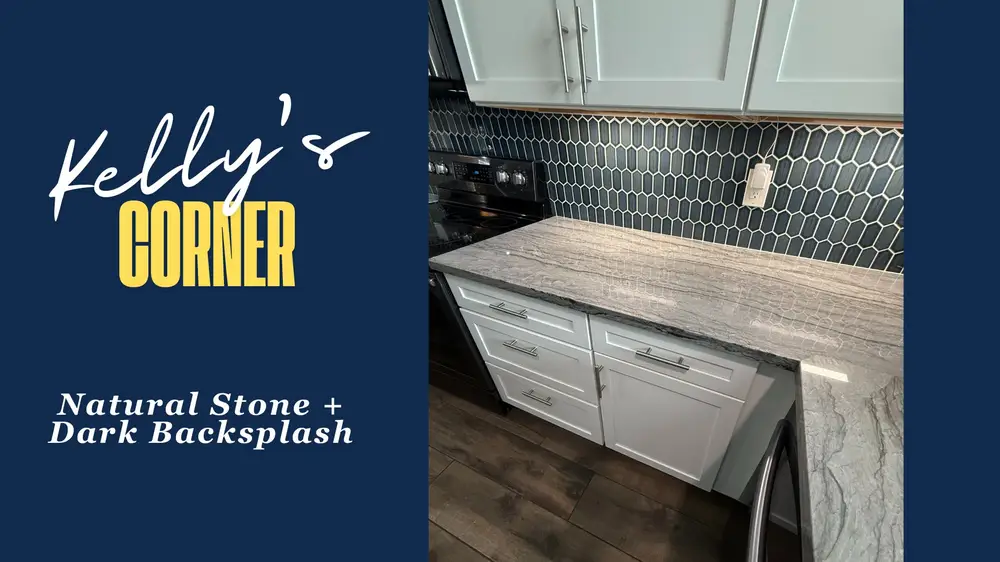
Natural Stone + Dark Backsplash
On this page
Spend a morning in our Phoenix showroom and you’ll notice a pattern: homeowners with white kitchens or wood-look tile floors are craving an update that feels fresh and current, but still timeless. The winning combo I keep guiding people toward is natural stone countertops paired with a dark tile backsplash. It’s high contrast without being harsh, layered without being busy, and grounded in nature’s palette so it won’t feel dated next year.
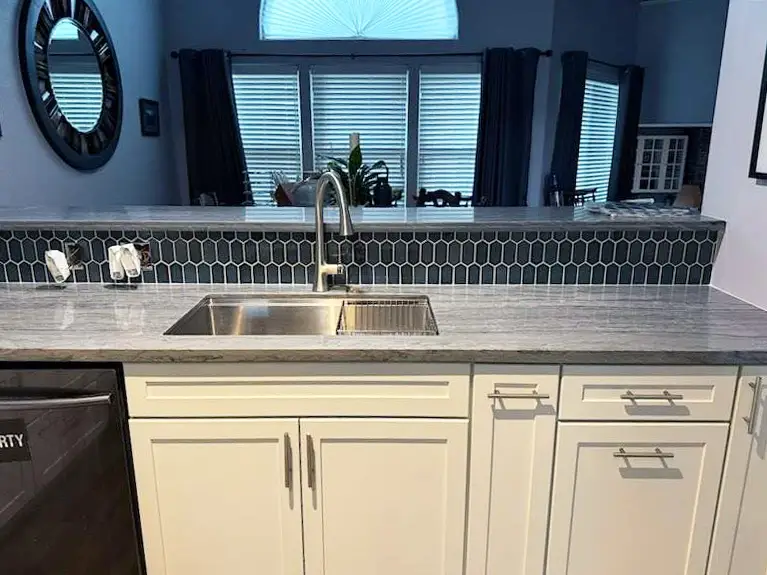
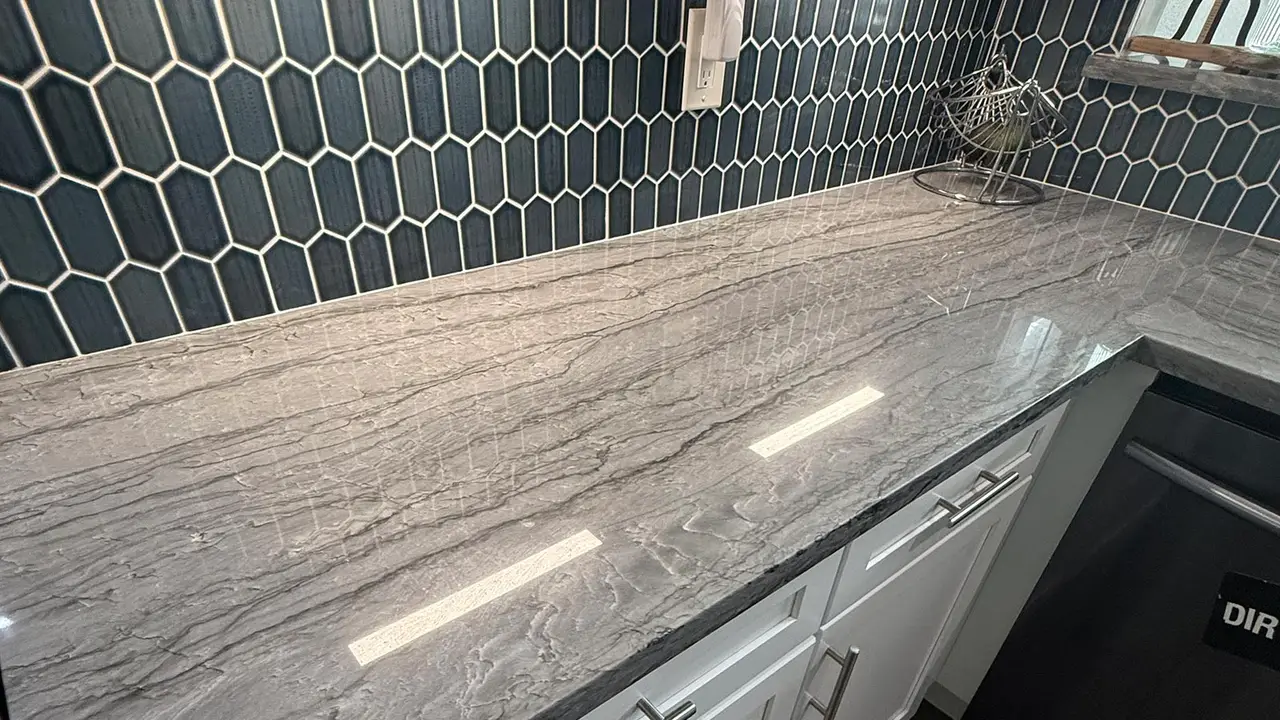
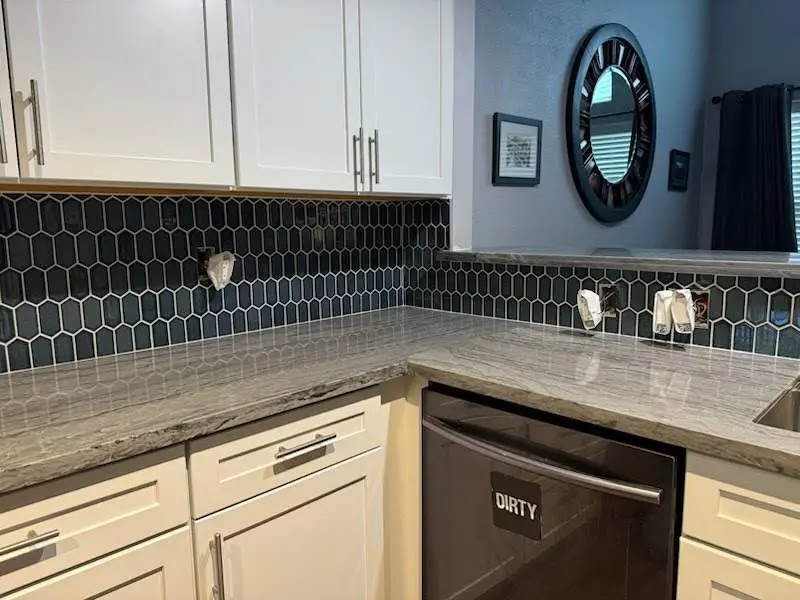
Our recent install, Platino Grey Quartzite on the counters, white full-overlay Shaker cabinets, and a deep blue elongated-hex backsplash. Is the perfect case study. It’s a look that checks every design box: contrast, texture, movement, warmth, and light. And because so many homes already have white cabinets or wood-look tile, you can adopt this style with minimal changes and maximum impact.
The design formula: five elements working in harmony
- The stone’s movement: Quartzite brings organic veining and layered grey tones that read sophisticated, not sterile.
- The dark backsplash: Deep blue tile adds drama and dimension, acting like the kitchen’s eyeliner, defining the features you already love.
- The crisp cabinetry: Full-overlay white Shaker doors create clean sightlines so the stone and tile can shine.
- The warm floor: Rustic wood-look tile grounds the palette and prevents a cool-grey scheme from feeling cold.
- The metal finishes & lighting: Brushed nickel or champagne gold hardware plus warm-white LEDs pull everything together.
When these pieces are balanced, you get a space that feels intentional and layered, a room that looks just as good at 7 a.m. coffee as it does for a candlelit dinner.
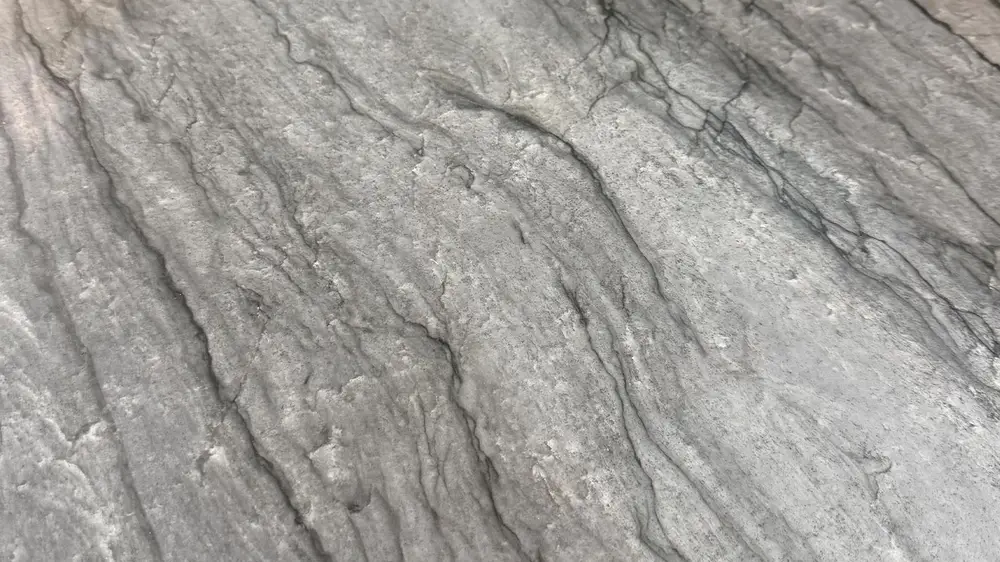
Meet Platino Grey Quartzite: nature’s neutral with personality
Not every “grey” stone behaves the same. Platino Grey Quartzite carries subtle ribbons of cool and warm greys, hints of silvery taupe, and soft white veining. In daylight it feels airy; under evening lighting it turns moodier and more luxurious. That chameleon quality is a big reason designers (and my clients) love it. It plays nicely with white cabinets and dark tile without fighting for attention.
Performance you can live with
-
- Durability: As a quartzite, it’s harder than marble and stands up well to daily kitchen life.
- Finish options: Polished for shine and reflection, or honed/leathery for a soft, touchable matte.
- Sealing: A quality penetrating sealer protects against most stains while preserving the stone’s natural look.
- Edge profiles: I like a sleek eased edge for contemporary kitchens or a mitered edge if you want that thick, furniture-like statement.
Insider tip: when you view slabs in our yard, hold a cabinet door sample and backsplash tile right against the stone. Watch how the undertones talk to each other. Platino Grey’s nuanced veining is what makes the whole palette feel custom.
Beyond the basics, these features are what make Platino Grey Quartzite such a standout choice for kitchens that see real, everyday use. Its durability means you won’t have to baby your counters. Hot pans, heavy cutting boards, and even the occasional dropped pot are less likely to cause damage compared to softer stones. The finish you choose will influence the entire mood of your kitchen: polished quartzite reflects light beautifully and adds a touch of glam, while honed or leathered finishes create a more casual, tactile feel that hides fingerprints and minor marks. Proper sealing is essential for preserving the stone’s natural beauty and resisting common kitchen spills, and we recommend reapplying on schedule to keep it performing like new. Edge profiles may seem like a small detail, but they can completely change the style language of your space, eased edges give you a crisp, modern line, while mitered edges add drama and a furniture-like quality that pairs especially well with waterfall island designs. Taking the time to compare your slab with cabinet and tile samples ensures your final installation feels harmonious and intentional, elevating your kitchen from simply “updated” to truly designer-level.
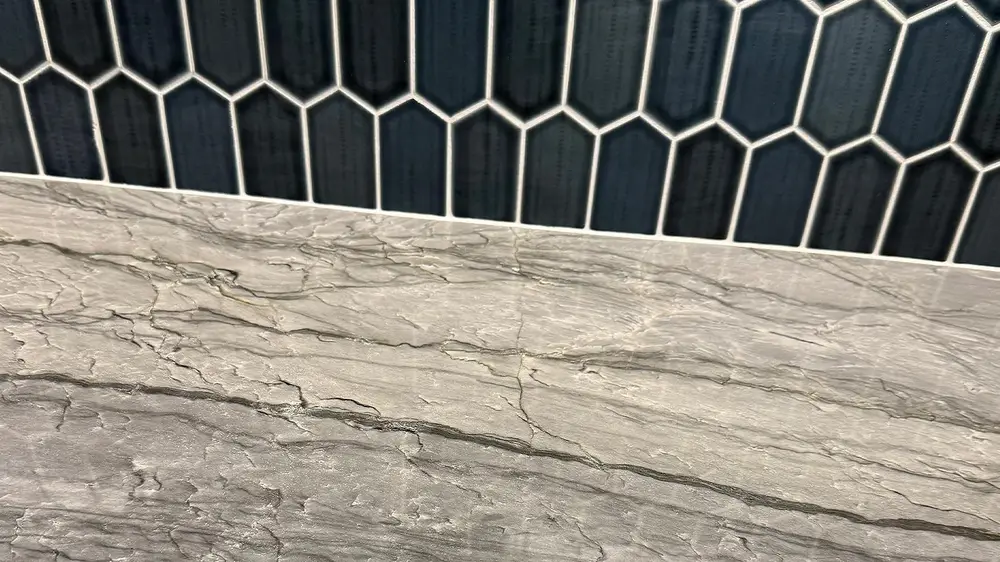
Why a dark blue backsplash is the new “modern neutral”
A navy or ink-blue backsplash reads almost like charcoal, but with more depth and life. It complements stainless appliances, flatters both cool and warm metals, and brings out the best in grey stone, especially quartzite with white and silver veining. The elongated hex in our project adds a quiet geometric rhythm that’s interesting up close and calm from across the room. Go a shade or two deeper than “navy blazer” and the color behaves like a sophisticated neutral: it recedes when the sun is bright, then blooms to a luxe, inky tone under evening pendants. That chameleon quality is why designers lean on it for longevity. Your kitchen won’t feel trend-chased next year.
Sheen matters: satin or glossy tile bounces light across the counters, while matte tile absorbs glare and feels more architectural. Pair with a grout just a step darker than the tile for a seamless, low-maintenance look that keeps attention on the stone’s veining. Blue also mediates between white cabinets and wood-look floors, bridging cool and warm elements so the whole space reads intentional. Scale is your friend. Elongated hex and slim bricks stretch the eye horizontally, making galley runs appear longer. Take it to the ceiling behind a range for a custom finish, or run it under open shelves to frame styled moments without visual clutter.
Shape, sheen, and grout: the details that make it sing
- Shape: Elongated hex and slim brick are trending because they elongate the wall and feel upscale without screaming “trend.”
- Sheen: A satin or glossy finish bounces light and keeps a dark color from feeling heavy. Matte tiles skew more modern and soften glare under strong windows.
- Grout: Slightly darker grout on a dark tile keeps maintenance easy and your eye on the stone. If you want more pattern, go lighter for definition.
Concerned about dark feeling “too dark”? Pair it with under-cabinet lighting (we can help spec it). The stone’s pale veining plus white cabinets keep the whole composition bright and balanced.
What customers say
Phoenix homeowners love the results.
Showed up at their showroom / warehouse… picked out a countertop easily, scheduled, installed 2 weeks later. PHENOMENAL quality of installation.
Matthew S. · GoogleWe were able to find a countertop that fit our larger island without any seams, and at a great price as well.
Doug M. · GoogleGreat selections with reasonable price and very helpful workers.
Han D. · Google







How the rustic wood-look floor completes the palette
The floor is the unsung hero here. Wood-look tile brings comfort and warmth to a cool palette, think cozy, not cold. The natural variation in the planks echoes the stone’s movement and makes the kitchen feel collected instead of clinical. If your home already has wood-look tile (many in the Valley do), you’re halfway to this look. Lean into undertones: a mid-tone walnut or weathered oak bridges the cool greys of quartzite and the depth of a navy backsplash so the room feels balanced. Plank size matters, too. Longer, wider tiles visually expand the space and reduce grout lines, letting the quartzite and backsplash carry the drama. Keep grout close to the tile color for a continuous, low-maintenance surface.
Layout is another quiet power move, run planks the long direction of the kitchen to elongate sightlines, and use a one-third stagger to minimize lippage and keep things tailored. Performance-wise, porcelain wood-look tile is a workhorse: it won’t cup, fade, or flinch at water, pets, or patio traffic, and matte or textured finishes add slip resistance without looking “matte.” If you crave extra comfort, pair it with area runners or radiant floor heat. Finally, let the floor do what real wood does best, add soul. Its grain pattern softens all the right edges so the stone reads luxurious, the blue reads intentional, and the whole kitchen feels welcoming from day one.
Undertone check
Look at your floor’s undertone. If it leans warm (honey, walnut), make sure your stone has a touch of warmth in the veining (Platino Grey does). If it leans cool (weathered grey), your deep blue tile will bridge that coolness to white cabinets beautifully.
Starting from a white kitchen? Here’s the simplest upgrade path
- Keep your white Shakers. They’re classic and provide the crisp frame our stone-and-tile combo needs.
- Swap the counters to natural stone. Choose a quartzite like Platino Grey for movement and longevity.
- Add a dark backsplash. Deep blue or ink pairs with virtually any white paint tone.
- Update hardware & faucet. Brushed nickel for a cooler read; champagne gold for warmth and a touch of jewelry.
- Install under-cabinet lighting. It brightens the stone, shines across the tile, and elevates nightly tasks.
With those moves, your kitchen reads fully renovated without replacing your cabinetry boxes, a smart use of budget.
Already have wood-look tile floors? Build upward from that warmth
We do this all the time: keep the floor, then layer on the stone and backsplash to complement it. If your planks skew warm (think walnut, chestnut, or honey oak) lean into contrast that still respects the undertone. Platino Grey Quartzite is fantastic here because its silvery ribbons pick up stainless and cool paint colors while its soft taupe notes nod back to the floor. Pair it with a deep navy backsplash for structure: the blue acts like charcoal but with more life, defining the perimeter and letting the quartzite’s veining read crisp. A satin or glossy tile keeps the palette energized and helps reflect daylight; brushed-nickel hardware repeats the cool accents without fighting the wood’s warmth. Keep grout just a shade darker than the tile for low maintenance and a continuous read. If your cabinets are white or soft greige, you’ve now got a three-way harmony: warm floor, cool counters, and a tailored dark field on the wall. Finish with under-cabinet lighting to wash the tile and make the stone sparkle at night. The result feels collected, not busy, warm underfoot, clean at eye level, and unmistakably current.
For floors that skew cool and greyed (driftwood, weathered oak, or ash) your goal is softness and light management. Choose a slightly glossier dark tile to bounce illumination back into the room, and consider a honed or lightly leathered quartzite to mute glare on the horizontal plane. That matte-on-polish mix reads sophisticated and keeps fingerprints at bay. Echo the floor’s cool pigment by choosing a navy with an ink or slate cast rather than a royal tone; it will bridge effortlessly to stainless and black appliances. Cabinets in crisp white or light putty provide separation so the surfaces don’t collapse into one giant grey field. If your floor has a lot of movement (knots, saw marks, strong variation) simplify the backsplash geometry. A slim brick or straight-stack pattern creates visual breathing room and reins in the rhythm so the counters can lead. Keep grout tone-on-tone to avoid checkerboarding. Scale matters: longer tiles lengthen galley runs and reduce lines that compete with wood planks. As always, set samples right on the slab under warm and cool LEDs before you commit. When the undertones align, the room calms down: the eye moves across the floor, rests on the stone, and lands on the backsplash without confusion.
Case study: our Platino Grey + deep blue project
This client came in wanting “something different” without tossing their entire layout. We anchored the plan with Platino Grey Quartzite, its veining had both cool pewter and warm silver, so it played perfectly with their rustic floor. We kept their love for clean lines by specifying full-overlay white Shaker cabinets. Then we introduced a deep blue elongated-hex tile all along the backsplash wall to add tailored drama and highlight the stone.
We finished with a stainless sink and brushed-nickel faucet to echo the cooler tones in the quartzite and appliances. Under-cabinet lighting washed down the tile, and suddenly the whole kitchen felt taller, brighter, and far more custom, without moving a single wall.
Other natural stones that love a dark backsplash
-
- Taj Mahal Quartzite: Creamy beige with subtle taupe veining; pair with deep blue for coastal-elegant warmth.
- White Macaubas Quartzite: Linear grey veining; striking under glossy midnight-blue tile.
- Maldivi Quartzite: Swirling light and medium greys; reads crisp with ink-blue brick tile.
Bring your cabinet swatch and a floor sample. We’ll lay everything together in the showroom so you can see the chemistry happen in real time.
Common pitfalls (and how I steer you around them)
To avoid competing patterns, if your floor has high variation, choose a simpler backsplash layout so the stone remains the star. If the palette feels too cool overall, warm it up with champagne-gold or brushed-brass hardware, wood accents, or warmer-temperature lighting. Skip high-contrast grout on dark tile. Bright white lines on deep blue can look busy; a tone-on-tone grout keeps the focus on the slab. And don’t ignore LRV (light reflectance value): in kitchens with limited natural light, select a polished finish on the stone and a satin or glossy tile to boost reflectivity and keep the space bright and balanced.

Ready to try it? How we can help at Superior Stone & Cabinet
Whether you’re ready to choose finishes or just want to see possibilities, stop by our Phoenix showroom and walk the space with me. In our display and warehouse, you can set Platino Grey Quartzite right against deep navy tiles, compare satin versus glossy sheens under both warm and cool lighting, and preview combinations in 3D so you can picture them in your layout. If it’s easier, we’ll come to you. I’ll bring a curated kit. Cabinet door samples, navy tile options, grout sticks, edge-profile blocks, and quartzite cuttings, so you can judge undertones against your actual floors, paint, and appliances. We’ll look at how your kitchen lights change from morning to evening, talk through installation timing, budget tiers, and maintenance in plain language, and leave you with a clear plan. No pressure. Just helpful guidance from people who do this every day. When you’re ready, we can template digitally, fabricate in-house, and coordinate the tile set around your schedule. Visit the showroom and ask for Kelly, or book an in-home palette session and I’ll meet you at your kitchen island. Either way, we’ll turn “natural stone + dark backsplash” into the best version for your home.
Keep reading
Related articles
Prefabricated vs Slab Countertops
We break down the differences between prefabricated vs slab countertops so you can choose the countertop that best fits your project needs.
Granite Counters · June 2, 2026Salome High School Students Build a House — Superior Stone & Cabinet Installs the Countertops
Salome High School's CTE students built a house from the ground up. Superior Stone & Cabinet supplied and installed White Orion granite countertops to finish it right.
Quartz · July 10, 2025Discover the Innovation Behind Symphony Printed Engineered Stone
Discover Symphony printed engineered stone by Aurea Stone—luxury design, eco-safe production, and stunning styles like Calacatta Ghiandia.

Visit the showroom & warehouse
Pick your exact slab in person.
Walk the slab racks, compare colors side by side, and talk with an on-site designer. No appointment needed.
| Mon – Fri | 8 am – 5 pm |
| Saturday | 10 am – 3 pm |
| Sunday | Closed |
| Warehouse pickup Mon–Fri 8 am – 3 pm | |